
NYC Transport Guide
24/7 subway, OMNY tap-to-pay, MetroCard, buses, taxis, Citi Bike, NYC Ferry, and everything you need to navigate New York City
Powered by ITINE
Get this guide as a tappable itinerary
Day-by-day plan, audio tours, and one-tap Google Maps — completely free.
Destinations
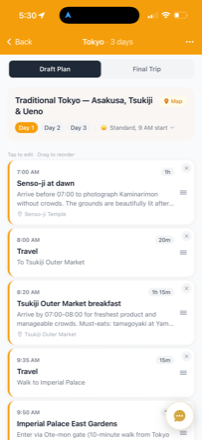
Your Itinerary
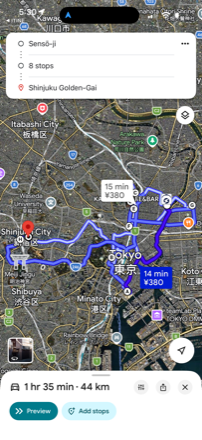
Google Maps
Getting around New York City is easy once you understand the system. The subway runs 24/7 with 472 stations across 5 boroughs — a single ride costs $2.90 and the 7-day unlimited MetroCard is just $34. OMNY tap-to-pay lets you use any contactless card or phone, automatically capping at $34/week after 12 rides. Buses cover crosstown routes the subway misses. Yellow taxis are iconic but expensive in traffic — Uber/Lyft is 20-30% cheaper for longer trips. Citi Bike ($4.49/trip) is excellent for short rides, and the NYC Ferry ($4) offers scenic waterfront routes.
The key rule: subway for most trips, walk for short distances, Uber for late nights, and Citi Bike for crosstown routes. Download the MTA app before arriving — it is the single most useful tool for navigating NYC. If you are arriving from out of state, check our guides on getting to NYC from Boston or Washington DC.
Transport Options
Subway
Recommended$2.90/ride or $34/7-day unlimitedThe NYC subway has 472 stations across 36 lines, making it one of the world's most extensive metro systems. It runs 24/7, 365 days a year. During peak hours (7-9:30 AM, 5-7 PM), trains run every 2-5 minutes. Off-peak service is every 5-10 minutes. Late night (midnight-5 AM), expect 10-20 minute waits. The system covers Manhattan, Brooklyn, Queens, the Bronx, and parts of Staten Island. Numbered lines (1-7) and lettered lines (A-Z) serve different routes. Download the MTA app for real-time arrivals and service alerts.
Pros
- + Runs 24/7 — one of few metro systems worldwide with round-the-clock service
- + Covers all major neighborhoods and attractions across 5 boroughs
- + $2.90 flat fare regardless of distance — same price for 1 stop or 30
- + 7-day unlimited MetroCard ($34) is exceptional value for visitors
- + OMNY tap-to-pay with automatic $34/week cap — no card needed
- + Children under 44 inches ride free
Cons
- - Can be crowded during rush hours — especially on the L, 4/5, and 6 lines
- - Some stations are not accessible (no elevators) — check mta.info
- - Weekend service changes and track work can disrupt routes
- - Platforms can be hot in summer and cold in winter
Tip: Download the MTA app before arriving — it shows real-time train arrivals, service alerts, and trip planning. The 7-day unlimited MetroCard pays for itself in 12 rides. Stand to the right on escalators, let passengers exit before boarding, and move to the center of the car.
Buses
Available$2.90/ride (same as subway, free transfers)NYC buses cover routes the subway does not, particularly crosstown routes in Manhattan (east-west). The M14, M23, M34, M42, M57, M66, M72, M79, M86, and M96 crosstown buses are useful for visitors. Select Bus Service (SBS) routes are faster with limited stops and off-board payment. Regular buses stop every 2-3 blocks. Buses use the same MetroCard and OMNY as the subway. Free transfers between bus and subway within 2 hours. Night bus service operates when the subway has reduced frequency.
Pros
- + Covers crosstown Manhattan routes the subway lacks
- + Same fare as subway with free transfers
- + Above-ground — see the city as you travel
- + All buses are wheelchair and stroller accessible
- + Night service complements the subway
Cons
- - Much slower than the subway due to traffic
- - Can be confusing for visitors — many overlapping routes
- - Frequent stops on local routes slow travel significantly
- - Less reliable schedules than the subway
Tip: Buses are most useful for crosstown (east-west) trips in Manhattan where the subway requires transfers. Use Google Maps or the MTA app for bus routes. Select Bus Service (SBS) routes are faster — pay at the kiosk on the sidewalk before boarding. Tap OMNY or insert MetroCard at the front door.
Taxis & Rideshare
AvailableBase $3.50 + $0.50/1/5 mile; Uber/Lyft $10-40Yellow taxis are iconic and easily hailed in Manhattan — just raise your hand when the rooftop number is lit. The meter starts at $3.50 plus $0.50 per 1/5 mile, with a $2.50 congestion surcharge below 96th Street and a $1 night surcharge (8 PM-6 AM). JFK airport has a flat rate of $70 to Manhattan. Uber, Lyft, and Via operate throughout the city with app-based pricing. Rideshare is typically 20-30% cheaper than taxis for longer trips. Green Boro Taxis serve Brooklyn, Queens, and the Bronx.
Pros
- + Yellow taxis are easy to hail throughout Manhattan
- + Uber/Lyft available 24/7 with transparent pricing
- + Door-to-door service — no navigation needed
- + Good for groups splitting the fare (4 passengers)
- + Flat $70 taxi fare from JFK to Manhattan
Cons
- - Midtown traffic makes taxis slower than the subway
- - Congestion surcharge ($2.50) adds to every Manhattan ride below 96th St
- - Surge pricing on Uber/Lyft during peak demand
- - Expensive for solo travelers — subway is 10x cheaper
Tip: Avoid taxis in Midtown during rush hour — the subway is faster. Use Uber/Lyft for Brooklyn and late-night rides. Always tip taxi drivers 15-20%. From JFK, the flat taxi rate ($70) is often cheaper than surge-priced Uber/Lyft. Hail taxis in Manhattan — use apps everywhere else.
Citi Bike & NYC Ferry
UsefulCiti Bike $4.49/trip; NYC Ferry $4/rideCiti Bike is NYC's bike-sharing system with 25,000+ bikes and 1,500+ stations across Manhattan, Brooklyn, Queens, and the Bronx. Single rides cost $4.49 for 30 minutes, day passes are $17.99 for unlimited 30-minute rides. E-bikes cost $0.26/minute extra. NYC Ferry operates waterfront routes ($4/ride) connecting Manhattan, Brooklyn, Queens, and the Bronx with scenic harbor views. The East River route from DUMBO to Midtown is popular with tourists. Both offer a different perspective on the city.
Pros
- + Citi Bike is fast for crosstown trips and bike lane routes
- + NYC Ferry offers scenic waterfront views at a transit price
- + Bikes available 24/7 at stations every few blocks
- + Ferry routes serve waterfront neighborhoods and parks
- + Healthier and more scenic than the subway
Cons
- - Cycling in Manhattan traffic is intimidating for beginners
- - Bikes must be docked within 30 minutes (single ride) to avoid fees
- - Ferry routes are limited and infrequent compared to subway
- - Citi Bike stations can be empty or full at popular times
Tip: The Hudson River Greenway is a car-free bike path running the length of Manhattan's west side — perfect for scenic cycling. NYC Ferry from DUMBO to Wall Street ($4) gives you harbor views for a transit price. Always use bike lanes and wear a helmet (available at Citi Bike valet stations).
Transit Passes Comparison
Single ride (OMNY)
$2.90
Tap any contactless card or phone at the turnstile. Caps at $34/week after 12 rides. Most convenient option.
Single ride MetroCard
$2.90
Buy from machines at any station. New card costs $1. Good for occasional rides if you prefer a physical card.
7-day unlimited MetroCard
$34
Unlimited subway and bus rides for 7 days from first use. Best value for visitors — pays for itself in 12 rides.
30-day unlimited MetroCard
$132
Unlimited travel for 30 days. Best for extended stays of 2+ weeks. Available at machines and online.
Pro Tips
OMNY vs MetroCard
OMNY tap-to-pay is the future of NYC transit. Tap any contactless credit/debit card or phone at the turnstile. After 12 rides ($34.80), the rest of the week is free — equivalent to an unlimited weekly pass. No card to buy or refill. MetroCard works but OMNY is more convenient for most visitors.
PATH to New Jersey
The PATH train ($2.75/ride) connects Manhattan to Hoboken, Jersey City, and Newark. Stations at World Trade Center, Christopher Street, 14th Street, 23rd Street, and 33rd Street. MetroCard works on PATH but OMNY does not. Useful for visiting the Liberty Science Center or staying in cheaper NJ hotels.
Subway Etiquette
Stand right, walk left on escalators. Let passengers exit before boarding. Move to the center of the car. Do not lean on poles. Take your backpack off in crowded cars. Keep belongings close. These unwritten rules matter to New Yorkers and following them earns quiet respect.
Walking Distances
Manhattan blocks are short east-west (~250 feet) and longer north-south (~900 feet). 20 north-south blocks equal approximately 1 mile. Most crosstown walks take 10-15 minutes. Walking is often faster than any transport for trips under 20 blocks in Midtown. Wear comfortable shoes — a typical NYC sightseeing day involves 15,000-25,000 steps.
NYC Transport FAQs
Get Your Free Travel Guide
PDF download + weekly travel tips
Join our community and get a comprehensive travel guide with maps, budgets, and insider tips delivered to your inbox.
Unsubscribe anytime. No spam, we promise.